

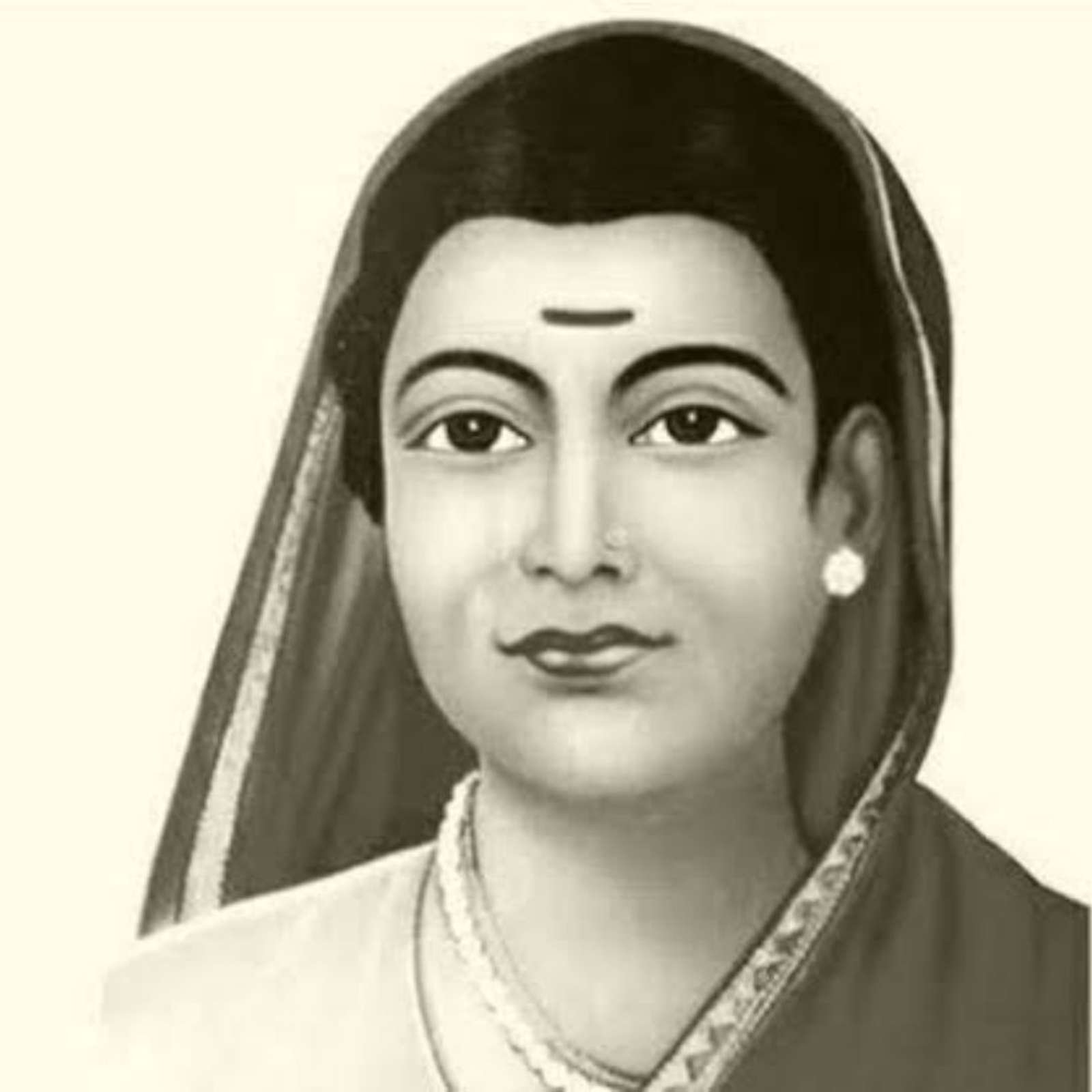
Savitribai Jyotirao Phule, an Indian poet, educator, and social reformer, was instrumental in the nineteenth-century growth of women’s education and empowerment. Savitribai and her husband Jyotirao Phule, who was one of the few literate women in those days, founded the first girl’s school in Pune in Bhide Wada. She worked tirelessly to educate and emancipate young widows, opposed child marriage and sati pratha, and advocated for widow remarriage. She is recognised as a prominent actor in Maharashtra’s social reform movement and an emblem of the Dalit Mang caste, alongside Annabhau Sathe and B. R. Ambedkar. She vigorously advocated for the removal of caste and gender discrimination, as well as a campaign against untouchability.
Early Life
Savitribai was born as the eldest daughter of Khandoji Neveshe Patil and Lakshmi on January 3, 1831, in Naigaon (now in Satara district) in British India. Girls were married off early in those days, therefore Savitribai, at nine years old, married Jyotirao Phule, when twelve years old, in 1840. Jyotirao rose to prominence as a thinker, writer, social activist, and anti-caste social reformer. He is regarded as a key role in Maharashtra’s social reform movement. Savitribai’s education began following her marriage. Her husband taught her to read and write after noticing her desire to learn and educate herself. She completed her regular school’s third- and fourth-year exams and gained an interest in teaching. She took training at Ms. Farar’s Institution in Ahmednagar. Jyotirao was a staunch supporter of Savitribai’s charity efforts.
Women’s Education and Empowerment
Jyotirao and Savitribai created Pune’s first indigenously administered girls’ school in 1848, when Savitribai was still in her adolescent years (Pune was then known as Poona). Despite being ostracised by their friends Usman Sheikh and his sister Fatima Sheikh, who also offered the Phule couple with room on their land to begin the school, the tenacious couple was allowed shelter despite being despised by both their family and the community for taking this action. Savitribai was the school’s first teacher. Later, Jyotirao and Savitribai founded schools for untouchable Mang and Mahar caste children. In 1852, there were three Phule schools that were operational. The British government honoured the Phule family on November 16 for their contributions to the field of education after Savitribai was named the best teacher of the year. In that same year, she also started the Mahila Seva Mandal with the intention of educating women about their rights, dignity, and other social issues. She was successful in organising barbers’ strikes in Mumbai and Pune to protest the pervasive practise of shaving widows’ heads.
The Phule’s closed all three of their schools by 1858. A few of the events that led to this include the Indian Rebellion of 1857, Jyotirao’s resignation from the school management committee following a dispute over the curriculum, and the government’s withdrawal of support. Unfazed by the circumstance, Jyotirao and Savitribai as well as Fatima Sheikh took charge of educating members of the oppressed populations as well. Savitribai founded 18 schools over the years and educated children from many castes. Savitribai and Fatima Sheikh were the first teachers of both women and people from underprivileged classes. Many people, particularly those from Pune’s upper caste who were opposed to Dalit schooling, were outraged. Locals bullied, tormented, and humiliated Savitribai and Fatima Sheikh in public. As she walked to school, Savitribai was showered with cow excrement, mud, and stones. Savitribai was adamant about her objective, and she would carry two saris despite the atrocities. Later, Saguna Bai joined Savitribai and Fatima Sheikh in leading the fight for education. In 1855, the Phules also built a night school so that labourers and farmers could work during the day and attend school at night.
Savitribai began the practise of providing stipends to students for attending school in order to reduce school dropout rates. She was a role model for the young girls she taught. She encouraged them to participate in activities such as writing and painting. Mukta Salve, a Savitribai student, wrote an article that became the face of Dalit feminism and literature at that time period. She held parent-teacher conferences at regular intervals to raise awareness among parents about the importance of education and encourage them to send their children to school on a regular basis.
Jyotirao and Savitribai also established a care centre named ‘Balhatya Pratibandhak Griha’ in 1863, which was possibly India’s first infanticide prohibition house. It was established so that pregnant Brahmin widows and rape victims may deliver their infants in a safe and secure environment, hence preventing the murdering of widows and lowering the prevalence of infanticide. Jyotirao and Savitribai, who were otherwise childless, adopted a child from a Brahmin widow named Kashibai in 1874, sending a strong statement to the society’s progressives. Yashavantrao, the adoptive son, went on to become a doctor.
While Jyotirao fought for widow remarriage, Savitribai worked relentlessly to combat societal evils such as child marriage and sati pratha, two of the most sensitive social concerns that were gradually undermining women’s fundamental life. She also worked to integrate child widows into society by teaching and empowering them, as well as advocating for their re-marriage. Such endeavours were also met with tremendous opposition from the strict upper caste society.
Additional Endeavours
She worked with her husband to abolish the caste system and the untouchability tradition, gain equality for members of lower castes, and reform Hindu family life. During a time when the shadow of an untouchable was considered filthy and people were unwilling to even lend water to thirsty untouchables, the couple opened a well in their home for the untouchables.
She was also involved with the ‘Satyashodhak Samaj,’ a social reform group founded by Jyotirao on September 24, 1873 in Pune. The samaj’s goal was to free women, Shudra, Dalits, and other less privileged people from oppression and exploitation. Its members comprised Muslims, Non-Brahmans, Brahmans, and government officials. The pair organised low-cost marriages in the samaj, with no priest or dowry. In such weddings, both brides and grooms made pledges that amounted to their wedding vows. Savitribai was the head of the women’s division, and after her husband died on November 28, 1890, she became the samaj’s chairwoman. Savitribai carried on her husband’s job through the samaj until her last breath.
During the famines that began in 1876, she and her husband toiled tirelessly. They not only delivered free meals in various regions, but also opened 52 free food hostels throughout Maharashtra. During the 1897 draught, Savitribai also convinced the British government to begin relief activities.
The educator and social crusader has also spoken out against caste and gender prejudice. Kavya Phule (1934) and Bavan Kashi Subodh Ratnakar (1982) are poetry collections.
Death
Yashwantrao, her adoptive son, was a doctor in his community. When the bubonic plague hit the area of Nallaspora, Maharastra, in 1897, the valiant Savitribai and Yashwantrao built a clinic on the outskirts of Pune to cure the disease’s victims. She drove the patients to the clinic, where her son cared for them alongside her. She contracted the illness while caring for the patients and died on March 10, 1897.
Legacy
Savitribai’s unrelenting efforts to address society’s long-standing crimes, as well as her rich legacy of beneficial reforms, continue to inspire future generations. Her reformist works have garnered acclaim over the years. In 1983, the Pune City Corporation dedicated a memorial in her honour. India Post released a stamp in her honour on March 10, 1998. The University of Pune was renamed Savitribai Phule Pune University in her honour in 2015. Google celebrated her 186th birthday with a Google doodle on January 3, 2017.
The Savitribai Phule Prize honours female social revolutionaries from Maharashtra.